





Albany-based
Local representation from an Albany office
ALBANY & SOUTHWEST GEORGIA MOTORCYCLE ACCIDENT LAWYER
 500+ Five-Star Reviews

Have photographs of the motorcycle, vehicle damage, crash scene, helmet, riding gear, or a crash report number? Text them to us at (229) 420-4104
Local representation from an Albany office
Hugh worked in insurance before becoming a lawyer
$400,000 motorcycle crash result*
*Past results do not guarantee a similar outcome. Every case depends on its own facts and applicable law.
RESULTS
$400,000
Motorcycle crash*
$100,000
Red-light violation involving a motorcycle*

THE FACTS COME FIRST
Some insurance companies and adjusters may approach a motorcycle claim differently from a regular car-accident claim. Before the evidence has been fully reviewed, they may assume the rider was speeding, weaving through traffic, riding aggressively, or taking an unnecessary risk.
The make or style of a motorcycle does not establish its speed. The fact that a rider owns a sport bike does not prove how that motorcycle was being operated at the time of the crash. Even a citation or disputed riding decision may be only one part of a much larger factual picture.
What we examine instead
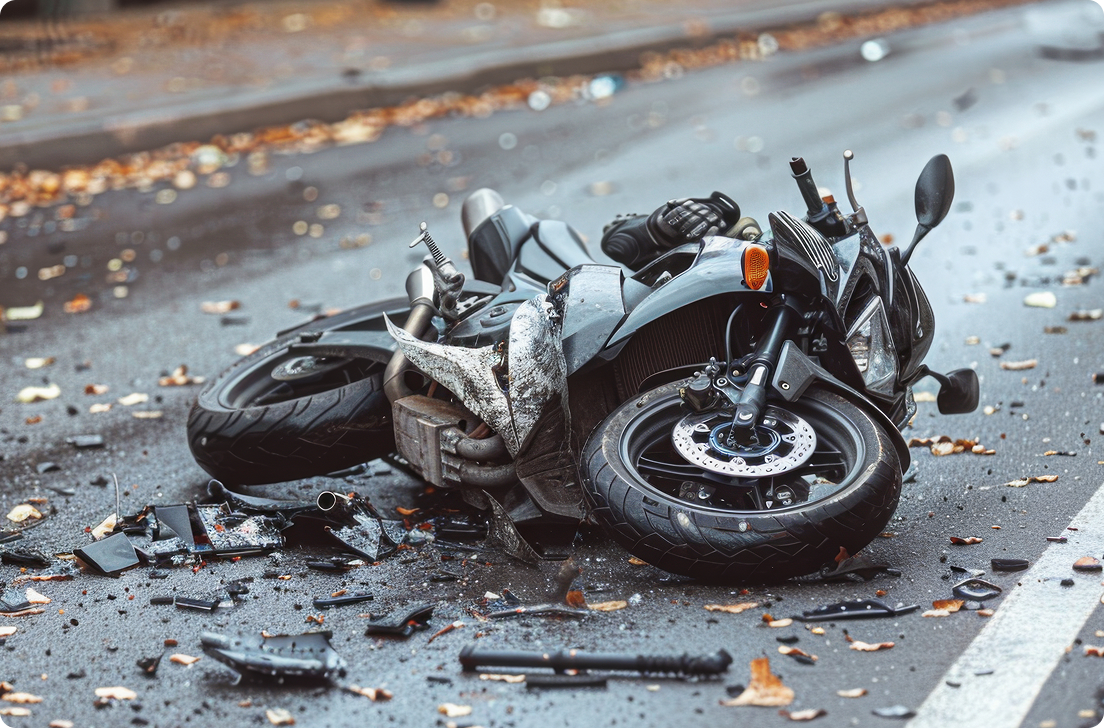
Depending on what happened, that can include:
Statements from independent witnesses
Photographs and measurements from the crash scene
Damage to the motorcycle and other vehicles
Traffic-camera, business-camera, dash-camera, or helmet-camera footage
Skid marks, debris, final resting positions, and roadway characteristics
Traffic-signal timing and sight-distance issues
Available vehicle data and electronic evidence
Medical records documenting the injuries and their effects
The conduct of every driver involved, not only the rider
An estimate given while someone is hurt, medicated, or shaken is not the same thing as an accident reconstruction. A motorcycle case should be evaluated based on the totality of the evidence rather than a stereotype about the person riding.
What if the adjuster says, “The motorcycle came out of nowhere”?
That statement often means the driver did not see the rider before impact. It does not, by itself, establish why the driver failed to see the motorcycle or who had the right of way. The investigation still needs to address visibility, lighting, traffic, sight lines, speed evidence, lane position, turn timing, and whether the driver looked carefully before turning or changing lanes.

LOCAL ROOTS. INSURANCE EXPERIENCE. PERSONAL CONTACT.
Hugh Morris is a Leesburg native who has practiced law in Georgia since 1999, with a background in risk management and insurance from the University of Georgia. He personally contacts new clients to begin their claim, and treats every case the way he'd want his own family treated after a serious accident.
From the Albany office, Hugh Morris Law represents injured people and families throughout Southwest Georgia, Leesburg, Sylvester, Dawson, Camilla, Bainbridge, Cairo, Thomasville, Moultrie, Blakely, Donalsonville, and every community in between.
Leesburg native · UGA Risk Management & Insurance graduate · Practicing law since 1999
You do not need an accident reconstruction, a complete medical diagnosis, or a legal theory before you call. You also should not assume you have no claim merely because you received a citation, may have made a riding mistake, were accused of speeding, or are unsure exactly how the crash unfolded. Start with what you know.
Explain where the crash occurred, what you remember, how you were hurt, where the motorcycle is now, and whether an insurance company has contacted you. Tell us about any fact that concerns you. Hugh should understand the full situation rather than evaluate only the parts that appear favorable.
Depending on the case, we may work to identify and preserve crash-scene evidence; witness statements; available surveillance or traffic footage; the motorcycle, helmet, and damaged riding gear; photographs and repair documentation; other-vehicle data; insurance policies and coverage; and medical evidence and lost-income documentation. Some evidence can disappear, be recorded over, or become harder to locate as time passes.
Some cases are resolved through negotiation. Others require a lawsuit so evidence can be obtained formally and disputed issues can be presented to a judge or jury. Hugh explains the options, risks, and tradeoffs before major decisions are made. No particular result or timeline can be promised.
Georgia law recognizes that a motorcycle is entitled to the full use of a traffic lane. Another motor vehicle should not be operated in a way that deprives a motorcycle of that lane. Georgia also prohibits a motorcycle from traveling between lanes or adjacent rows of vehicles, but fault is not decided by asking only whether the rider made a mistake. Liability often depends on a careful review of the facts.
Investigators may examine who had the right of way, whether a driver turned left into the rider's path, changed lanes without checking mirrors or blind spots, or ran a red light or stop sign. They may also evaluate how much time and distance each person had to react, whether a phone or another distraction played a role, whether road conditions, lighting, weather, or a vehicle defect contributed to the crash, and whether more than one person or company shares responsibility.
A driver turns left in front of the motorcycle
A driver may see an approaching motorcycle but misjudge its distance or speed. In other cases, the driver may not look carefully before beginning the turn. Signal timing, vehicle positions, sight distance, video, and witness testimony can be critical.
A driver changes lanes into the rider
These cases often involve blind-spot disputes. We look at lane position, mirrors, turn signals, vehicle damage, traffic flow, and whether the driver made a safe observation before moving over.
A driver runs a red light or stop sign
The police report may be useful, but it is not always the end of the investigation. Nearby businesses, residences, traffic systems, or other vehicles may have recorded the collision.
A rider is struck from behind
A stopped or slowing motorcyclist has far less physical protection than someone inside a passenger vehicle. The investigation may focus on following distance, distraction, braking, and whether the rear driver recognized traffic conditions in time.
The insurer says the rider was speeding
We look for evidence, not guesses. That can include the damage pattern, scene measurements, video, witness accounts, vehicle data, roadway geometry, and qualified reconstruction analysis when the facts warrant it.
What should be preserved after a motorcycle crash?
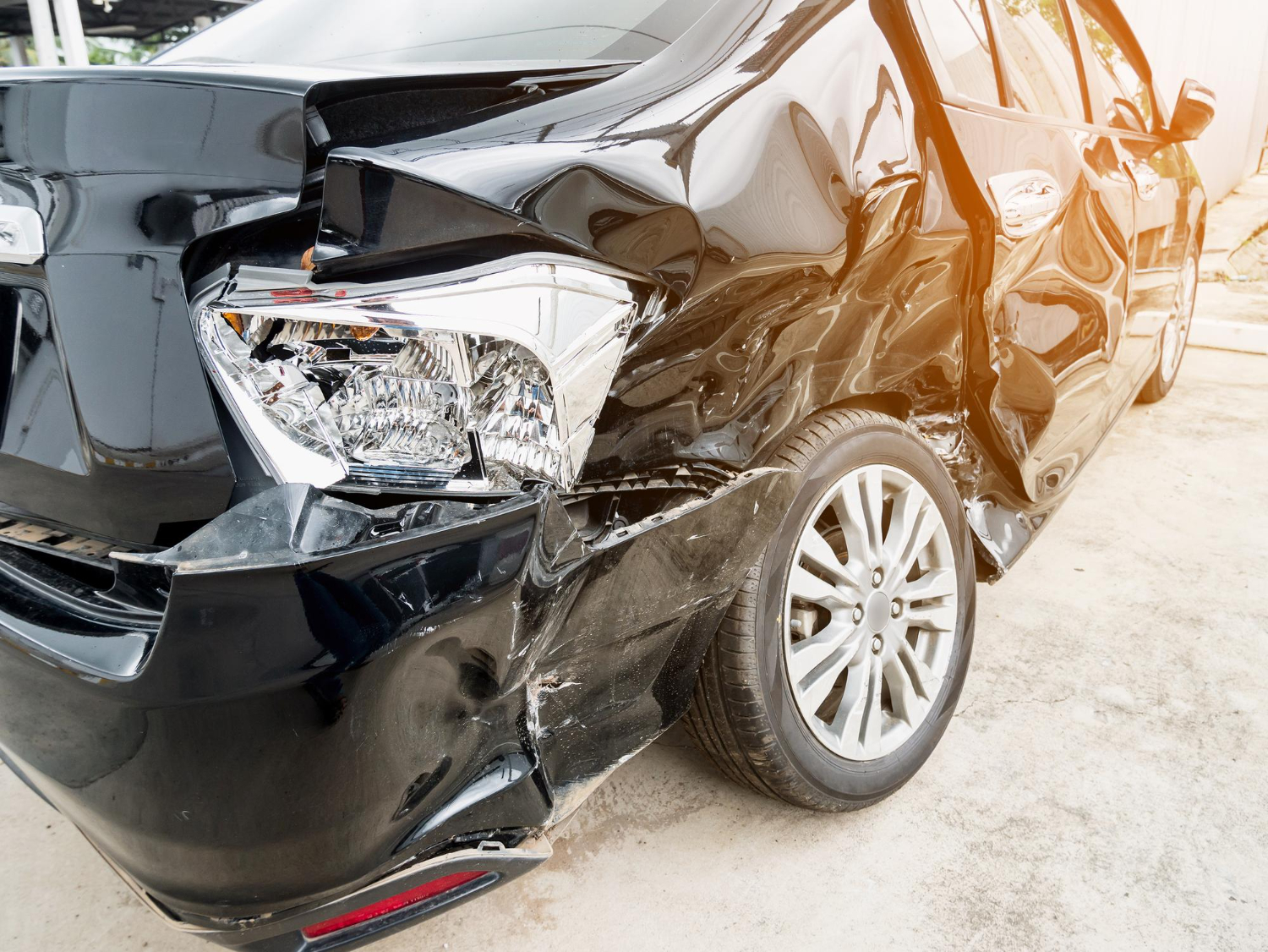
When reasonably possible, preserve:
The motorcycle before destructive repair or disposal
The helmet and visor
Jackets, pants, boots, gloves, and other damaged gear
Camera footage in its original format
Photographs taken at the scene or tow yard
Witness names, numbers, messages, and social-media contacts
Medical instructions, bills, work notes, and mileage records
Communications from insurance companies
Receipts for towing, storage, repair estimates, and replacement gear
Do not allow unnecessary storage charges to grow indefinitely. The goal is to document and preserve the evidence before the motorcycle or gear is altered, repaired, sold, or destroyed.
Hear directly from clients about their experience working with Hugh Morris Law, from the first phone call through the resolution of their case.
"I chose Hugh Morris from a radio commercial. I am glad I did. I was a top priority from day one. Kathryn who oversaw my case was amazing she was always available and answered my questions. She showed care and concern for my wellbeing and fight to get me what I deserve. If I’m ever in the position again I will definitely call Hugh Morris. I recommend them to everyone."

"Hugh is a down to earth guy. I met Hugh over 20 years. I consider him a great friend and a wonderful attorney."

"Hugh Morris entire staff is very friendly, helpful, knowledgeable, patient, VERY informative on keeping me updated on the process. I LOVE them… The entire staff takes you with so much respect and care. I highly recommend using Hugh Morris for any/ all of your auto accident needs. You won’t be disappointed."

"Mr. Hugh represented my wife, grandkids and I after an automobile accident. His assistants were proactive and very informative. We were kept in the loop and they fought for the very best settlement for us. I will definitely let Mr. Hugh and his assistants represent us again if needed."

"At Hugh Morris, Attorney at Law, they are truly professional and genuinely caring. They listen attentively to all my needs and concerns, always offering their unwavering support every step of the way."

"Good Practice. Very knowledgeable, professional. I was kept informed by the Staff. Hugh actually called me and had a 45 minute conversation over the phone that I thought was unique. I recommend to anyone that has a need for a lawyer."
"I had a great experience working with this injury attorney. From the beginning, Kathryn and Hugh was professional, responsive, and very clear about the process. I always felt informed and supported with the way she handled my case with care and expertise. The outcome exceeded my expectations, and I’m very grateful for her hard work. I would highly recommend Hugh Morris to anyone needing a personal injury attorney."

"My lawyer showed a deep understanding of my personal situation and demonstrated empathy throughout the legal process. This helped me a great deal to get through this difficult time. The BEST PLACE TO GO. Thank yall so much"

"Highly recommend Mr. Morris and his staff-very thorough, competent , and professional."

"Hugh and his team are great! They help take the stress and worry out of dealing with the aftermath of an accident so you can focus on healing and getting back to normal. Would definitely recommend to anyone!"


